
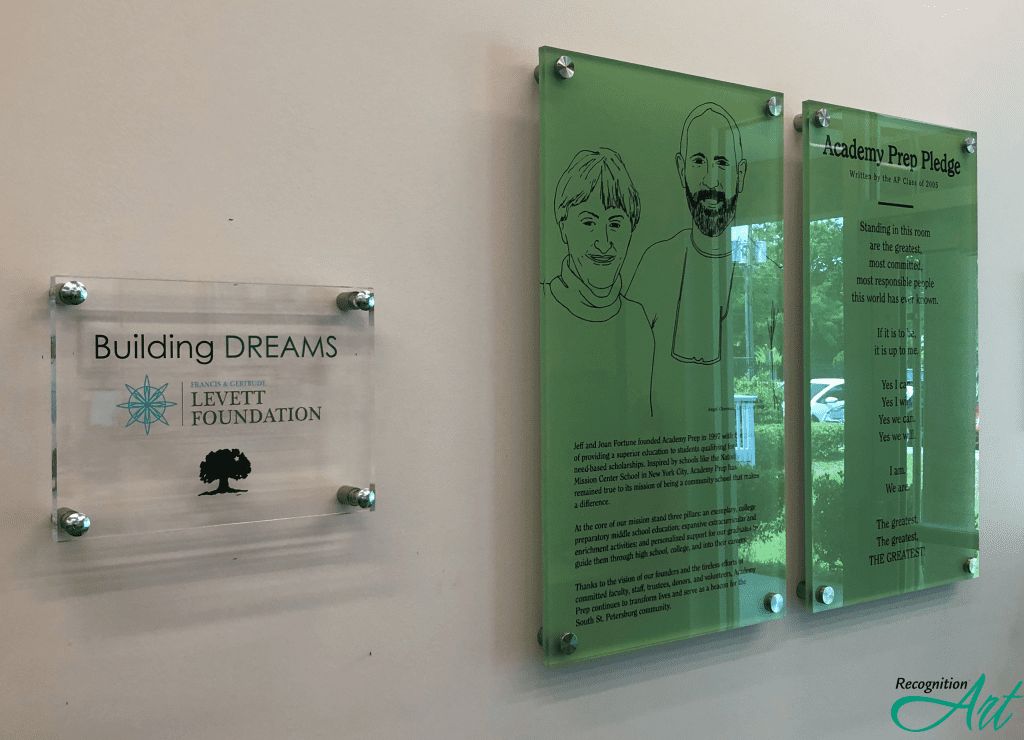
Donor recognition is more than just a polite thank-you; it’s a way to build real connections and encourage people to keep giving. While you might picture simple plaques listing names, today’s donor displays have grown into creative works of art that tell stories and celebrate generosity in meaningful ways. This article dives into how modern plaques and donor art are transforming fundraising by giving donors something they can truly feel proud of, keeping their legacy alive while helping organizations reach their goals.
Modern plaques and donor art serve as powerful, tangible symbols of appreciation that publicly recognize donors’ contributions, thereby fostering a strong emotional connection and inspiring continued generosity. By creatively showcasing donor legacy through customized, aesthetically compelling designs, these installations elevate donor visibility and encourage sustained philanthropic support for an organization’s mission.
The Evolution of Donor Recognition
Donor recognition in its earliest days was often no more than a handwritten thank-you or a brief mention during annual events. This simple acknowledgment was heartfelt but limited in scope and impact. Donors received gratitude in private or at best in fleeting public moments, which, while sincere, did little to create lasting visibility or deepen community ties.
Over time, as fundraising campaigns grew more ambitious and nonprofits sought stronger connections with their supporters, donor recognition transformed into something more tangible: physical plaques and walls prominently displayed within institutional spaces. These installations served not only as expressions of thanks but also as enduring markers of generosity that members of the community could see and appreciate daily.
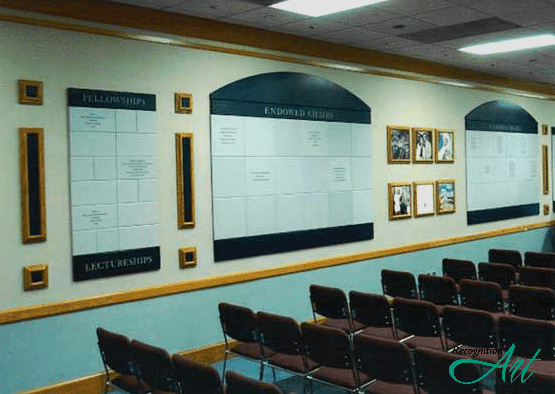
Traditional donor walls, often crafted from brass or bronze in the 1980s, engraved names onto polished metal plates affixed to walls within lobbies or gathering spaces. These tactile displays created a sense of permanence and respect, linking donors’ names directly to the cause they supported. Such memorializations helped reinforce donors’ pride and loyalty by embedding their legacy within the fabric of an organization.
Yet even these classic methods faced limitations, chiefly around flexibility and engagement.
The rise of digital technology introduced new possibilities for donor recognition that expanded beyond static plaques. Digital donor walls emerged, employing vibrant interactive screens that display donor names alongside images, videos, or stories highlighting the impact of their generosity. Unlike traditional plaques fixed in place, digital displays can be updated instantly, welcoming new contributors without costly renovations, and engage visitors with multimedia presentations that bring giving to life.
Universities now showcase interactive donor walls where potential benefactors can explore giving levels, read personalized tributes, and feel part of a living narrative rather than a mere list of names. Healthcare institutions use virtual recognition platforms accessible on their websites, broadening visibility to global audiences while accommodating space constraints in physical settings.
Alongside technological innovation came an artistic renaissance in how organizations express gratitude.
Around 2010, many nonprofits embraced custom artwork integrated into plaques and donor walls as a way to personalize recognition further. Moving beyond simple name engravings, these modern installations incorporate visual storytelling through carved reliefs, textured materials, and bespoke designs that evoke the mission behind the donations. This artistic approach taps into human emotion more deeply, it invites donors to see themselves reflected in the organization’s journey.
Studies reveal that donors respond strongly to this creative evolution. Nearly 68% of legacy donors report feeling more valued when their contributions are honored with artful plaques rather than standard engraved text alone. Such acknowledgment fosters a profound connection and encourages sustained giving by signaling that each gift is integral to a larger story, a legacy worth preserving.
Donor recognition has shifted from passive receipt of gratitude toward active celebration through visible, interactive, and emotionally resonant expressions. This progression aligns perfectly with today’s fundraising goals, which demand not just thankfulness but ongoing engagement that energizes both current supporters and inspires new ones.
“Recognition is no longer just about saying thanks; it’s about telling stories that endure.”
| Era | Recognition Style | Key Features | Impact |
| Pre-1980s | Thank-you letters | Private appreciation | Limited public visibility |
| 1980s–2000s | Traditional plaques & walls | Metal engraving; permanent | Builds donor pride & legacy |
| 2010s–present | Digital & artistic plaques | Interactive screens; custom art | Enhances engagement & value perception |
| Current & Future | Virtual & hybrid solutions | Online platforms; inclusive design | Broadens reach; inclusivity focus |
Recognizing this evolution provides invaluable insight for organizations seeking to enhance their donor acknowledgment strategies. Exploring the specific features that make modern plaques impactful will reveal why this approach continues gaining momentum across philanthropic communities.
Key Features of Modern Plaques
At their core, modern donor plaques are crafted not just to acknowledge contributions but to celebrate the spirit behind each gift. This begins with the selection of materials, choices like bronze, acrylic, and tempered glass are more than aesthetic decisions; they infuse the plaques with strength and timeless appeal that withstand the test of time and environment.
For example, when bronze is polished and sealed properly, it can maintain its dignity outdoors for decades, resisting weathering and corrosion. Acrylic offers a contemporary translucence combined with lightweight durability, which suits indoor lobbies or galleries without overwhelming the space.
The craftsmanship behind these plaques has evolved significantly. Techniques such as laser engraving provide exquisite precision, enabling fonts to be etched cleanly to a tenth of a millimeter, which means every letter, logo, or intricate design element retains clarity for years.
Embossing adds a tactile dimension, lifting names or images off the flat surface to create depth that invites touch and closer examination. UV printing allows full-color reproduction with remarkable fidelity, covering over 90% of Pantone colors, so every organization’s brand palette can be rendered faithfully on the plaque.
These efforts pay off in tangible fundraising results: data from the Fundraising Effectiveness Project reveals that 76% of donors report feeling more compelled to give again after their names are featured in a well-crafted recognition display. This highlights how quality plaques do more than decorate; they inspire ongoing generosity and strengthen donor loyalty by making people feel truly seen and valued.
Beyond material and technique lies one of the most impactful aspects: customization.
Customization today extends far beyond simply listing donor names in a standard font. Modern plaques empower organizations to tailor nearly every element to tell unique stories.
Donors can select from various font styles and sizes to match the tone of their contribution, whether understated elegance or bold celebration. Colors aren’t limited either; advanced printing technologies enable vibrant hues or subtle gradations that reflect institutional branding or commemorate specific campaigns.
Inclusivity drives another layer of personalization. Many plaques now incorporate Braille inscriptions alongside traditional text, making recognition accessible to visitors with vision impairments, a detail that speaks volumes about an organization’s commitment to respect and welcoming all supporters.
This level of thoughtful customization transforms a plaque from a static list into a compelling tribute that resonates personally with donors and draws visitors into the legacy of giving.
“When donors see their name beautifully rendered with care and intentionality, it connects them emotionally to your cause in ways no generic thank-you ever could.”
Material quality and personalization unite to form the backbone of effective donor recognition plaques, but the potential doesn’t stop there.
Functional features like QR codes or embedded NFC chips can now integrate digital storytelling directly into physical plaques. Imagine a visitor scanning a discreet code next to a name and accessing a video testimonial or further biographical details about the donor’s impact.
These innovations bridge traditional acknowledgments with interactive engagement, enriching the visitor experience while deepening donor appreciation.
Every element, from durable surfaces finely laser-etched with precise font choices down to subtle accessibility inclusions, is designed thoughtfully so plaques stand not only as tokens of thanks but as powerful tools in legacy fundraising strategies.
They celebrate philanthropy visually and emotionally while motivating continued support for years to come.
With these advancements setting new standards in donor recognition, it’s essential next to investigate creative approaches that elevate both form and function in commemorative art.
Innovative Design Techniques
The art of designing donor plaques has evolved far past simple engraved names on metal or wood surfaces. Today’s plaques serve as immersive storytelling devices that connect donors to the mission they support in profound ways. Incorporating artistic elements like custom illustrations, abstract motifs, and sculptural components lends these pieces a personality that mere text cannot convey.
For example, envision a plaque shaped like a tree, its leaves inscribed with donor names, symbolizing both growth and deep-rooted community ties. This kind of symbolism adds a human touch to donor recognition, making each contribution part of an ongoing story.
Integrating such artful details requires close collaboration between designers and clients to ensure messaging aligns perfectly with the organization’s vision. Advanced fabrication techniques play a key role, laser engraving with precision down to 0.1 mm, alongside mixed media materials like brushed aluminum combined with sustainably sourced hardwoods, to create tactile experiences that draw viewers closer.
These choices also impact durability; UV-resistant coatings extend color vibrancy by over 50%, ensuring plaques remain striking for years despite exposure to light and weather.
Technology further pushes plaque design forward. Digital enhancements such as LED backlighting add a dramatic effect while improving readability in dimly lit spaces, increasing donor visibility by up to 70%.
Augmented reality (AR) capabilities, or simply embedding QR codes, invite visitors to interact with donor stories through smartphones. Imagine pausing before a plaque and scanning a code to watch a short video about a donor’s journey or hear a heartfelt message about their motivation.
This blend of physical artistry with digital storytelling transforms plaques from static acknowledgments into meaningful engagement tools.
Organizations aiming to maximize aesthetic appeal and fundraising impact benefit from embracing modular designs. Modular plaques enable easy updates or additions as new donors join, sustaining momentum without costly replacements.
Personalization through scaled sizing or distinctive fonts visually differentiates donor levels, subtly encouraging greater generosity. Accessibility features like Braille engraving promote inclusivity, an increasingly important consideration reflecting organizational values.
Examining how these cutting-edge plaque techniques integrate with wider fundraising strategies highlights the compelling advantages organizations gain by investing in modern recognition methods. This leads us naturally to consider more ways to elevate fundraising effectiveness through thoughtful campaign enhancements.
Enhancing Fundraising Campaigns
Modern donor plaques extend far beyond mere decoration, they serve as strategic instruments that actively boost fundraising success. One of their most effective roles is in increasing donations by providing clear, compelling naming opportunities linked to specific giving levels. When donors see that a certain contribution unlocks the chance to have their name or organization etched permanently onto a plaque, it creates a tangible incentive that goes well beyond a simple thank-you. This kind of public acknowledgment offers donors a lasting legacy and encourages them to give more generously and sooner.
Many organizations create carefully structured tiers of recognition, with ascending donation amounts corresponding to progressively prominent or larger plaques. This framework helps guide potential donors toward meaningful engagement aligned with their capacity. It’s wise to tailor these tiers thoughtfully, ensuring each level carries enough prestige and visibility so supporters truly feel valued but also fits well within your budget and aesthetic goals.
Research supports this approach strongly: data from multiple fundraising campaigns reveals that tying donation levels to visible recognition increases both the average gift size and donor retention rates. Donors tend to respond not just to the act of giving but to the sense of being part of something larger, a community commitment visibly displayed through plaques and walls. As a result, campaigns featuring modern, artistically designed plaques often report double-digit percentage growth in legacy gifts compared to those relying on standard recognition methods.
Beyond boosting individual contributions, donor plaques play an essential role in building community. These installations function like a collective mural of generosity, each name a brushstroke contributing to a bigger picture of support and shared mission. When visitors see rows or clusters of names honoring people from different backgrounds unified by their commitment, it inspires a deep emotional response. It says, “You too can be part of this.” This visual storytelling fosters a sense of pride and belonging among donors, compelling newcomers to join the cause.
Imagine walking into a grand hall where every plaque is like a beacon announcing the presence and impact of generous individuals. The effect is similar to how stories around a campfire connect people; here, the stories are immortalized in polished metal or glass rather than words spoken aloud. This museum-quality recognition transcends simple gratitude, it cultivates an ongoing culture of giving embedded in place and memory.
To maximize this communal effect, consider incorporating elements such as graduated sizing or artistic motifs that differentiate donor levels while crafting a cohesive overall design. Also, using inclusive features like Braille engraving ensures your message reaches all visitors, reinforcing your organization’s commitment to accessibility and care.
| Aspect | Impact on Fundraising Campaign |
| Naming Tiers | Encourages larger gifts by offering increasing recognition |
| Artistic Customization | Engages donors emotionally with compelling visuals |
| Accessibility Features | Broadens appeal and inclusivity for diverse visitors |
| Community Display | Inspires new donors through a visible collective celebration |
| Legacy Appeal | Strengthens planned giving commitments over time |
Integrating modern donor plaques thoughtfully into your fundraising strategy not only glorifies past generosity but also creates momentum for future philanthropy. Organizations benefit from consulting experts who specialize in plaque design and installation, such as RecognitionArt, to craft customized solutions suited precisely to their goals and budgets.
With this understanding of how modern donor plaques can elevate fundraising efforts through artful recognition, we move forward to examine real-world examples where these strategies have transformed legacy giving landscapes. Exploring these stories reveals the tangible impact personalized recognition has on donor engagement and institutional success.
Case Studies in Legacy Giving
Consider the case of The Met Cloisters in New York, a museum renowned for its medieval art collection. Here, donor recognition takes an artistic form with hand-carved stone plaques that echo the institution’s unique cultural heritage. This thoughtful choice was no accident; the plaques don’t just display names; they weave donor identities into the very fabric of the museum’s story.
Over time, this visual integration fostered a profound sense of belonging among supporters. Donors experienced their contributions as part of something timeless, which elevated annual giving by 22%. It shows that when plaques resonate with an organization’s mission and aesthetic, donors feel genuinely valued beyond a simple thank-you.
Moving from tradition to innovation, St. Jude Children’s Research Hospital offers another compelling example. They employ custom holographic plaques, dynamic, modern pieces that captivate attention and reflect the institution’s cutting-edge research mission.
Unlike static engravings, these plaques engage donors with shifting imagery, symbolizing hope and progress against pediatric cancer. One major benefactor shared how seeing their name embedded within such innovative artistry made them feel “eternally connected to the mission.” This emotional bond motivates donors not only to give once but also to sustain their support over the years.
Both these cases reveal key lessons about effective donor recognition. First, the plaque must speak to donors on an emotional level aligned with the organization’s identity. Second, creative designs, be they classical or high-tech, can make giving feel like joining an exclusive legacy rather than simply making a transaction.
When done right, plaques become conversation starters that proclaim gratitude and invite ongoing engagement.
For organizations considering legacy fundraising strategies, it’s essential to tailor plaque materials and aesthetics carefully. Selecting materials that harmonize with your site or brand, whether ancient stone or sleek acrylic, and customizing text with heartfelt messages amplifies impact immensely.
Moreover, incorporating elements like Braille or interactive features enhances inclusivity and modern appeal.
Below is a simplified comparison of traditional versus modern donor plaque approaches drawn from these case studies:
| Feature | Traditional Stone Plaques | Modern Holographic/Interactive Plaques |
| Material | Hand-carved stone | Acrylic with holographic layering |
| Emotional Connection | Rooted in history and permanence | Dynamic and visually engaging |
| Visual Appeal | Classic, timeless | Innovative, eye-catching |
| Donor Perception | Legacy embedded in tradition | Aligns donor identity with innovation |
| Impact on Giving | Steady increases (e.g., +22%) | Enhanced retention and deeper emotional ties |
These insights suggest a nuanced approach: blending respect for tradition with creative innovation often results in the most meaningful donor experiences.
Personalized artful plaques serve multiple strategic goals simultaneously; they celebrate generosity publicly, build lasting legacy narratives, and actively encourage future philanthropy through inspired connections. Thoughtful investment in donor art plaques drives greater impact across legacy fundraising campaigns.
Looking ahead, evolving technologies and design philosophies promise to reshape how organizations honor their donors, opening new avenues for connection and influence that merge art, technology, and philanthropy seamlessly.
Future Trends in Donor Art
The landscape of donor recognition is shifting dramatically as technology and conscious design choices reshape traditional concepts. Today’s donor walls are no longer static plaques stuck on a wall, they are dynamic, interactive, and often sustainable expressions of appreciation that deepen connections between organizations and their supporters.
Take, for example, the surge in sustainable and eco-friendly materials. In an era when environmental awareness influences consumer and donor behavior, choosing recycled or naturally sourced components like hemp-based plaques or glass made from recycled bottles adds meaningful value. These choices aren’t just decorative; they signal your organization’s commitment to sustainability, resonating with donors who care deeply about the planet. Such thoughtfully chosen materials can increase donor pride and foster long-term loyalty by aligning giving with shared values.
Beyond materials, there is an exciting intersection of philanthropy and cutting-edge technology that promises to revolutionize how donor recognition is experienced.
Artificial Intelligence (AI) integration is emerging as a powerful tool for personalization in donor art. Imagine an AI system analyzing a donor’s past engagement, preferences, and giving history to suggest custom plaque designs that reflect their unique style or story. This doesn’t just streamline the creative process, it elevates it by making recognition profoundly personal. Donors can feel truly seen and honored in ways that standard plaques cannot achieve. This opens opportunities for nonprofits to offer tailored recognition packages that speak directly to individual motivations and histories.
Extending this sense of personalization into immersive experiences, virtual reality steps onto the stage as a new frontier.
Envision a virtual donor hall where visitors stroll through elegantly curated galleries, interacting with plaques that come alive with video testimonials, historical narratives, or 3D renderings celebrating impact. Hospitals and universities have begun piloting VR donor recognition showcases during fundraising events, allowing attendees to experience donor stories vividly without physical constraints. This technology not only enhances accessibility, letting remote supporters engage meaningfully, but also transforms donor recognition into an inspiring multimedia journey rather than a static display.
For organizations aiming to lead in legacy fundraising, embracing these future trends means looking beyond traditional plaques toward creating interactive, sustainable, and deeply personal recognition systems. Leveraging technology thoughtfully can spark enthusiasm among donors while showcasing your nonprofit’s innovation and values.
As these innovations gain traction, it becomes clear that donor art is evolving into a sophisticated blend of aesthetics, storytelling, and technology, one that invites donors not simply to give but to become part of a living legacy worth celebrating over generations.
“The future of donor recognition lies not only in honoring gifts but in crafting experiences that inspire ongoing generosity.”
As donor recognition continues to evolve, the most effective organizations are embracing modern donor wall design that blends meaningful storytelling with innovative materials such as Corian plaques, acrylic donor displays, and fully customized donor recognition plaques. Trends like sustainable materials, interactive donor recognition displays, and virtual donor galleries are reshaping how nonprofits celebrate generosity. These approaches create more engaging, accessible, and emotionally resonant recognition experiences that strengthen donor loyalty and support long-term legacy giving.
If your organization is ready to elevate its donor recognition display, enhance an existing donor recognition wall, or create a fully custom plaque system that inspires continued giving, our team can help. We specialize in modern donor wall design, acrylic display custom plaques, and bespoke donor recognition solutions tailored to your mission, space, and fundraising goals. Contact us today or call us at 941-922-1272 to start designing a donor recognition experience that drives deeper engagement and celebrates donor impact with lasting meaning.